Top Solar Street Lamp Innovations for 2026 What Buyers Need to Know
In recent years, the demand for innovative Solar Street Lamps has significantly increased. As cities aim to reduce energy costs and improve sustainability, these lights are becoming essential. Sarah Johnson, a leading expert in renewable energy solutions, states, "Solar Street Lamps transform urban spaces into energy-efficient environments." Her insights highlight the importance of innovation in this industry.
2026 promises exciting advancements in Solar Street Lamp technology. Features like smart sensors, enhanced battery life, and integrated IoT connectivity will redefine street lighting. These developments not only save energy but also enhance safety and convenience for urban dwellers. However, potential buyers need to navigate numerous options available.
Choosing the right Solar Street Lamp can be daunting, given the rapid changes in technology. Not all products may offer the same level of reliability and efficiency. Buyers should consider factors such as energy output, durability, and installation requirements. It’s also important to reflect on the environmental impact of each choice. Investing in quality can lead to long-term benefits for both communities and the planet.

Emerging Technologies in Solar Street Lamp Designs for 2026
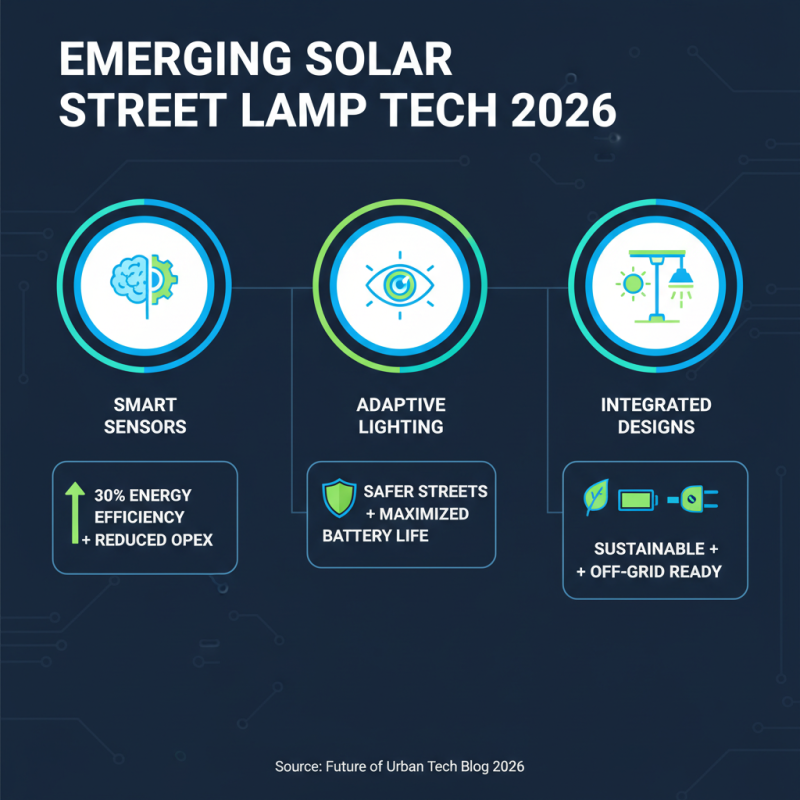
The landscape of solar street lamps is set to evolve dramatically by 2026. Emerging technologies will play a crucial role in this transition. For instance, the integration of smart sensors may enhance energy efficiency by up to 30%, reducing operational costs significantly. Adaptive lighting, which adjusts brightness based on pedestrian presence, will create safer environments while maximizing battery life.
Innovations in battery technology will also reshape solar street lamps. Lithium-ion batteries are becoming more efficient, directly impacting their longevity and charging cycles. A recent market report predicts a surge in demand for these advanced batteries, potentially doubling their market share by the end of 2026. The emphasis on sustainability will drive this shift, as cities aspire to reduce their carbon footprints.
**Tip:** When considering solar street lamps, assess the local sunlight conditions and energy requirements. This will ensure optimal performance and longevity of the units.
New materials, such as lightweight composites and durable polymers, will improve the structural integrity of solar street lamps. Yet, some challenges remain. Manufacturers must ensure these materials can withstand various weather conditions without compromising performance. Constant adaptation and improvement in design will be essential as municipalities navigate these changes.
**Tip:** Stay informed about the latest industry standards to ensure compliance and efficiency in your purchases.
Key Features to Consider When Choosing Solar Street Lamps
When selecting solar street lamps, several key features deserve attention. One important aspect is brightness. Measuring in lumens, adequate brightness ensures visibility in all conditions. Buyers should consider their specific needs, as locations may vary in sunlight exposure. Next, focusing on battery life is crucial. Quality batteries extend operational hours after sunset. Longevity can significantly impact overall performance, particularly in areas with shorter daylight.
Another element to evaluate is the materials used. Durable housing materials withstand harsh weather and wear over time. Look for corrosion-resistant components. This helps maintain lamp functionality and aesthetics. A well-designed solar street lamp should also feature smart technology. Features such as motion sensors can improve energy efficiency, turning lights on only when needed.
Buyers should reflect on installation and maintenance. Ease of installation can save time and costs. Maintenance routines should be simple enough for regular checks. Ultimately, while advanced features may enhance performance, practicality remains vital. Prioritizing reliability and user experience can lead to a more satisfied investment in solar street lighting.
Top Solar Street Lamp Innovations for 2026
This bar chart illustrates critical features to consider when selecting solar street lamps in 2026, based on their innovations score ranging from 0 to 100. The highest scores indicate significant advancements in energy efficiency and luminous efficacy, essential for improved street lighting solutions.
Sustainability and Environmental Impact of Solar Street Lamps
Solar street lamps offer a sustainable lighting solution, significantly reducing energy consumption. These lamps use solar panels to convert sunlight into electricity, providing power for street lighting. This innovation minimizes reliance on fossil fuels while lowering utility costs for municipalities.
The environmental impact of solar street lamps is profound. They reduce carbon emissions, contributing to cleaner air and a healthier planet. However, the production of solar panels still involves energy and raw materials. The lifecycle of these products requires careful consideration. Are we managing the waste effectively? Recycling methods for old panels need improvement.
Local economies benefit from solar installations. They create jobs in manufacturing and installation. But the initial investment can be challenging for some communities. Balancing cost and sustainability remains a complex challenge. Assessing the long-term benefits should be a priority for decision-makers.
Top Solar Street Lamp Innovations for 2026
| Feature |
Description |
Environmental Impact |
Sustainability Rating |
| LED Technology |
High efficiency and long lifespan, reducing energy consumption. |
Lower carbon footprint due to reduced electricity use. |
4/5 |
| Smart Sensors |
Automatically adjust brightness based on ambient light. |
Minimizes light pollution and conserves energy. |
5/5 |
| Solar Panel Efficiency |
Advanced photovoltaic materials for higher energy conversion. |
Reduces reliance on fossil fuels and promotes clean energy use. |
4.5/5 |
| Wireless Connectivity |
Allows remote monitoring and control of lighting systems. |
Enhances efficiency by optimizing energy use. |
4/5 |
| Recyclable Materials |
Use of materials that can be recycled at the end of product life. |
Significantly reduces landfill waste and resource depletion. |
5/5 |
Future Trends Shaping Solar Street Lighting Solutions
As solar street lighting evolves, several key trends are shaping its future. One significant trend is the advancement of smart technology integration. Sensors and IoT capabilities are providing more functionality. These features allow for real-time monitoring and responsiveness to environmental changes. For instance, lights can dim when no movement is detected, conserving energy effectively.
Another noteworthy trend is the use of energy-efficient LEDs. These lights last longer and consume less power. This advancement not only reduces costs but also limits environmental impact. Local governments are increasingly acknowledging the importance of sustainable solutions. They are now prioritizing these benefits in their planning.
However, there are challenges. Many installations still lack adequate reliability. Also, the initial costs can deter potential buyers. It's crucial for buyers to consider maintenance and warranty policies. Future innovations will likely address these issues, making solar street lighting an even more attractive option for urban areas.